
Thank you for Subscribing to Hospitality Business Review Weekly Brief

Seminaris Hotels
Luca Muscara, Head of F&B
Hospitality Through Zero-Waste Innovation and People-First Leadership
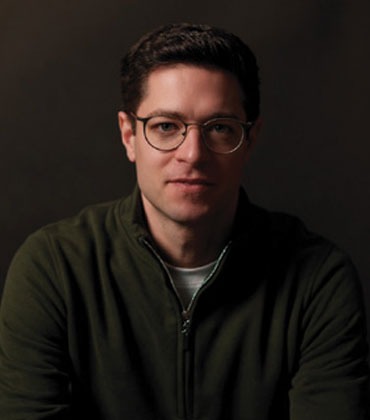
Luca Muscara
Building a Zero-Waste Food Culture
Our zero-waste concept primarily focuses on using food holistically or giving it a second life. This means that, in the production of our coffee break snacks, we only use ingredients that can be fully processed. Another way for us to act more responsibly with our resources is to give surplus food a second chance by transforming it into new, fresh snacks.
For us, the benefits are manifold. Our kitchen teams work creatively and continuously reinvent themselves, while our guests enjoy exciting, freshly produced items made on-site at the hotel.
The Biggest Challenges in Reducing Food Waste
The biggest challenge is getting started. Understanding what types of waste are generated can be complex and time-consuming. However, only those who truly understand their waste and its root causes can begin to tackle it effectively.
To support us in this process, we partnered with KITRO. Their AI-powered scale weighs and photographs all food waste, categorizing it by product type and cause of waste. This enables us to take targeted, property-specific action in each location.
Collaboration and Equal Treatment Matter in Hospitality Leadership
Equal treatment is extremely important in our daily work.
Decisions made within traditional hierarchical structures are not necessarily wrong, but they are often imprecise and can take a long time to reach a result. At Seminaris Hotels, we place great emphasis on transparency across all roles and levels. Decisions are always made collaboratively by the relevant experts.
For me, this also means that I am increasingly less involved in the decision-making process myself. This approach empowers my team members to initiate change and contribute in a meaningful way.
Be careful not to confuse responsibility with power—and instead listen more closely to the voices within your teams.
Creating Empowered Teams Without Losing Operational Excellence
The idea of teams working fully selfdetermined and autonomously is, of course, very appealing. However, to create a solid foundation and ensure that operational excellence is not compromised, Seminaris sets up guardrails within which all employees can operate.
Within these guidelines, there is always room to step outside the norm—but they provide essential orientation. I see myself as a servant leader. I support my team on an individual basis, recognizing that each team is different and therefore has different needs. It is my responsibility to help every individual unlock their full potential. Our guidelines serve as the safety net that enables this.
Advice for Hospitality Leaders Building Sustainable, People-Centered Operations
As leaders, most of us have worked long and hard to reach a position where we are finally able to make decisions. Even during my training, I was told: “Once you have your own team, you’ll be the one setting the rules.”
Now I am in that position—and I delegate decision-making to my team.
At first glance, this may seem like a step backward, but I firmly believe that every challenge within my team can also be solved by my team. What this requires is open communication among all team members. Any team member facing a challenge or seeking to drive change simply needs to bring together the right experts to collaboratively develop a solution.
It does not matter whether the idea comes from an apprentice or a head chef and the expert does not always have to be the manager.
We should be careful not to confuse responsibility with power—and instead listen more closely to the voices within your teams.
The articles from these contributors are based on their personal expertise and viewpoints, and do not necessarily reflect the opinions of their employers or affiliated organizations.
